
How to Plan an Effective Meeting: Start With a Strong Agenda
-Janita Anderson
A meeting without an agenda is just a conversation with a calendar invite.
And yet, most meetings start without a clear purpose, drift wherever the room takes them, and end without anyone knowing what happens next.
If you want to run meetings people actually value, start with the agenda. Here’s how to plan an effective meeting in four steps.

4 Steps to Plan an Effective Meeting
1. Know What Kind of Meeting You’re Running
Before you write a single agenda item, get clear on the purpose.
Are you making a decision? Solving a problem? Doing a planning session? Sharing information? The type of meeting shapes everything — who needs to be there, how long it should take, and what a successful outcome looks like. Include that purpose right in the title so attendees know what they’re walking into before they even open the invite.
If you need specific information for the meeting, ask team members to prepare ahead of time to present the information.
2. Write Down Your Objectives
Answer these two questions before every meeting:
Why does this group need to be in the same room (or call)? And what should everyone leave knowing, deciding, or committed to?
If you can’t answer both clearly, the meeting may not be ready to happen yet.
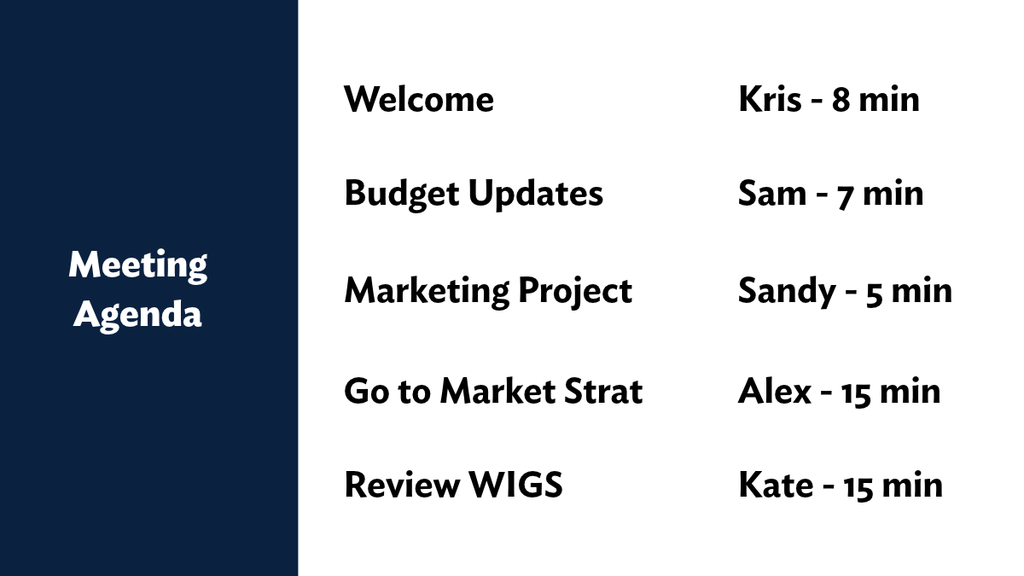
3. Build Out Each Agenda Item With an Owner and a Time
A real agenda isn’t just a list of topics — it’s a plan.
For each item, note what will happen, who’s leading it, and how long it will take. This keeps the meeting on track, makes ownership clear, and helps you spot when you’ve overloaded the time before anyone shows up. A good rule of thumb: add 25% buffer time. Things almost always take longer than expected.
4. Send It Ahead of Time
The agenda only works if people have it before they walk in.
Sharing it in advance lets attendees prepare, cuts down on the time spent getting everyone up to speed, and signals that you respect their time. A meeting that starts with everyone already oriented is a meeting that achieves its purpose and desired outcomes — and ends on time.
The Takeaway
A great agenda doesn’t guarantee a great meeting — but a missing one almost guarantees a bad one.
The extra time it takes to create an effective agenda will pave the way for sharper focus, effectiveness, and follow-through.
Run Better Meetings — and Lead More Effectively
The Project Management for the Unofficial Project Manager course at FranklinCovey Academy teaches the planning and communication skills that make meetings — and every project — run more effectively by getting stakeholder input and facilitating decisions and on-time work. Explore FranklinCovey Academy to find this course and others built to help you lead with greater effectiveness and confidence — for stronger results.
These self-paced online courses are designed to help you learn new mindsets, skillsets, and toolsets — and apply your new learning right away. At the completion of your course, you will be eligible to receive a FranklinCovey Certificate.
To help you succeed, you will receive a personal coach to guide you in your learning and application. Your coach will help you stay on track, complete the course, and receive your certificate.
Recent Posts
- Top Ways to Find Online Training for Leadership to Advance Your Career
- Unlock Your Leadership Potential: A Comprehensive Guide to Leadership and Management Courses
- Leadership Courses for Women: Empowering Female Leaders for Career Advancement and Personal Growth
- Developing Leadership Training: Benefits, & Best Practices
- Boost Productivity: Top Tips for Choosing Productivity Courses
- How to Plan an Effective Meeting: Start With a Strong Agenda
- 7 Simple Ways to Beat Virtual Meeting Fatigue
- 5 Ways to Stop Letting Your Emotions Run the Show at Work
- How to Receive Feedback Without Getting Defensive–Advance Your Career
- Why The Speed of Trust in the Workplace Is a Competitive Advantage
- 8 Workplace Relationship Building Strategies That Strengthen Collaboration