
5 Simple Ways to Improve Your Emotional Intelligence at Work
-Janita Anderson
Emotional intelligence (EQ) isn’t just a “nice-to-have” skill—it’s one of the biggest drivers of professional success.
In fact, research shows EQ can matter even more than technical skills or IQ, especially as you move into leadership roles .
So what exactly is EQ? At its core, it’s your ability to understand yourself, manage your emotions, and navigate relationships effectively.
The good news: EQ is not fixed and it’s learnable. You can build your EQ over time in five ways.
1. Get Honest Feedback

Most of us aren’t great at assessing ourselves objectively.
One of the fastest ways to build self-awareness and emotional intelligence at work is to ask others—peers, managers, or direct reports—for feedback. Ask for feedback that is specific, example-based, and ask why it matters (the impact of your work, skills, and abilities). Pay attention to patterns in what you hear. Over time, those insights can help you better understand your strengths and blind spots. Once you know your strengths, you can continue to build on them. The blind spots will allow you to get clarity about where you need to improve and why it matters.
2. Know Your Triggers

Everyone has situations that push their buttons.
Instead of trying to eliminate those reactions, focus on managing them. Identify what tends to frustrate or stress you, and decide in advance how you’ll respond. Even a simple plan—like pausing before reacting—can make a big difference. Make some time to reflect, write down what you notice about your triggers, how you tend to respond, and the consequences.
Now choose something to work on–what trigger will you focus on? How will you proactively respond rather than being reactive.
3. Strengthen Your Listening Skills

Strong listeners tend to have stronger relationships.
Practice staying fully present in conversations. Avoid interrupting, ask thoughtful questions, and reflect back what you hear. Paying attention to tone and body language can also help you better understand what others are really saying.
Seek first to understand then to be understood. Listen genuinely to others to understand their point of view.
You can use a simple phrase to show your intent: “I would like to understand where you are coming from, and make sure I get it right.” As you listen, you can also ask clarifying questions to make sure you understand the other person. Check to see if the person felt understood with a simple question: “Did I understand you, or did I miss something?”
4. Stay Connected to What Motivates You

EQ isn’t just about managing emotions—it’s also about understanding what drives you.
When your goals align with what genuinely motivates you, it’s easier to stay focused, engaged, and resilient. Take time to reflect on what matters most in your work and adjust your goals if needed.
5. Show Appreciation Often

One of the simplest ways to improve your relationships is to recognize others.
A sincere thank-you or acknowledgment can go a long way in building trust and connection. People want to feel valued—and leaders who consistently show appreciation create stronger, more engaged teams.
You can build a practice of appreciation and reinforce people’s contributions and strengths. This will build trust and confidence in you and others on your team.
The Takeaway
Emotional intelligence isn’t built overnight—but small, consistent actions can lead to meaningful growth.
By increasing self-awareness, managing your reactions, and strengthening your relationships, you’ll not only improve your performance—you’ll become someone others trust and want to work with.
Learn Practical Habits That Build Emotional Intelligence
The 7 Habits of Highly Effective People by Stephen R. Covey is an international best-selling book. It is recognized globally as providing one of the most valuable frameworks for developing people with emotional intelligence from the inside out. FranklinCovey helps organizations and teams around the world, including Fortune 500 companies, learn how to apply the 7 Habits for sustainable growth and results.
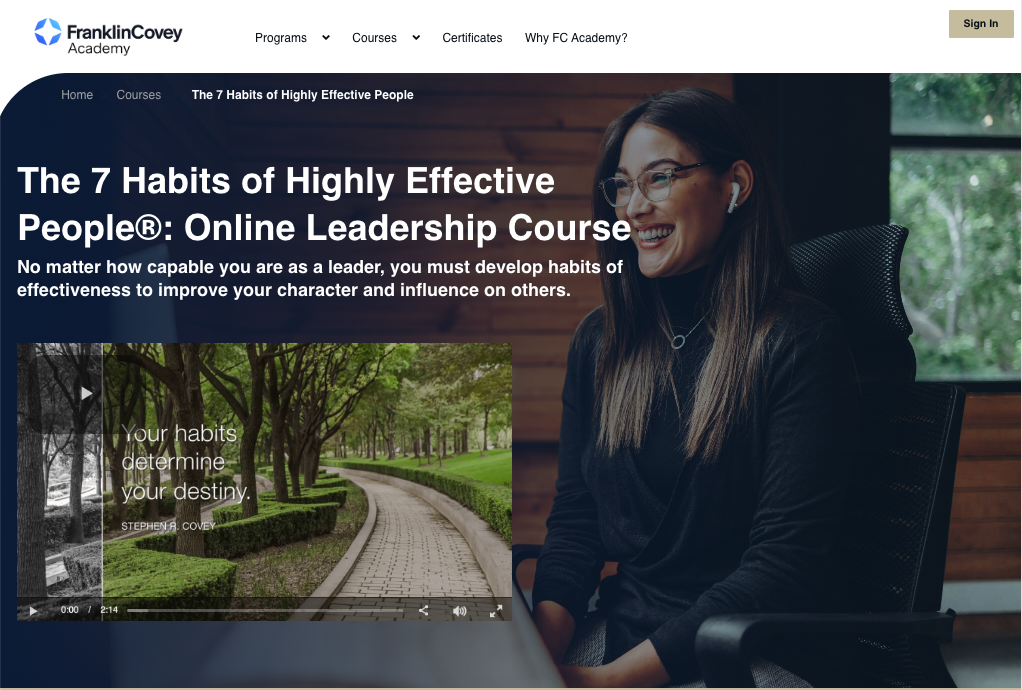
Now you can take an online, self-paced 7 Habits course at FranklinCovey Academy to grow your emotional intelligence. Based on principles, these habits can transform your life and work, empowering you to live and work according to what matters most to you.
Explore FranklinCovey Academy to find the 7 Habits course and many other courses designed to help you develop skills and habits for your career success. With each course, you will receive a personal coach to support and guide you to success. You can also earn an industry-recognized FranklinCovey certificate to advance your career opportunities.
Recent Posts
- Top Ways to Find Online Training for Leadership to Advance Your Career
- Unlock Your Leadership Potential: A Comprehensive Guide to Leadership and Management Courses
- Leadership Courses for Women: Empowering Female Leaders for Career Advancement and Personal Growth
- Developing Leadership Training: Benefits, & Best Practices
- Boost Productivity: Top Tips for Choosing Productivity Courses
- Why The Speed of Trust in the Workplace Is a Competitive Advantage
- 8 Workplace Relationship Building Strategies That Strengthen Collaboration
- 3 Types of Challenges That Motivate and Energize Your Team
- 9 Ways Leaders Can Motivate Their Team
- How to Build a Culture of Team Accountability
- Free Book Sample: Project Management for the Unofficial Project Manager